ChillShield Foam Impact Protection Gear
- Features thickened 2.5cm EVA foam pads strategically placed to absorb impact during falls while maintaining full mobility
- High-stretch quick-dry Lycra fabric provides second-skin comfort and excellent moisture management during intense activity
- Elastic waistband and ankle cuffs ensure secure, customized fit that stays in position without restricting movement
- Lightweight construction at just 325g offers comprehensive protection without bulk or weight fatigue
- Versatile design suitable for multiple sports including skiing, skating, and other outdoor activities
- Features thickened 2.5cm EVA foam pads strategically placed to absorb impact during falls while maintaining full mobility
- High-stretch quick-dry Lycra fabric provides second-skin comfort and excellent moisture management during intense activity
- Elastic waistband and ankle cuffs ensure secure, customized fit that stays in position without restricting movement
- Lightweight construction at just 325g offers comprehensive protection without bulk or weight fatigue
- Versatile design suitable for multiple sports including skiing, skating, and other outdoor activities
| Category | Specification |
|---|---|
| Protection | Multi-density EVA foam (2.5cm) / Silicon |
| Main Material | Nylon+Spandex (85%/15%) |
| Protection Zones | Hips/Legs/Thighs/Knees |
| Weight | 300g |
| Suitable Sports | Skiing/Skating/Outdoor |
| Category | Specification |
|---|---|
| Protection | Multi-density EVA foam (2.5cm) / Silicon |
| Main Material | Nylon+Spandex (85%/15%) |
| Protection Zones | Hips/Legs/Thighs/Knees |
| Weight | 300g |
| Suitable Sports | Skiing/Skating/Outdoor |
- Features thickened 2.5cm EVA foam pads strategically placed to absorb impact during falls while maintaining full mobility
- High-stretch quick-dry Lycra fabric provides second-skin comfort and excellent moisture management during intense activity
- Elastic waistband and ankle cuffs ensure secure, customized fit that stays in position without restricting movement
- Lightweight construction at just 325g offers comprehensive protection without bulk or weight fatigue
- Versatile design suitable for multiple sports including skiing, skating, and other outdoor activities
- Features thickened 2.5cm EVA foam pads strategically placed to absorb impact during falls while maintaining full mobility
- High-stretch quick-dry Lycra fabric provides second-skin comfort and excellent moisture management during intense activity
- Elastic waistband and ankle cuffs ensure secure, customized fit that stays in position without restricting movement
- Lightweight construction at just 325g offers comprehensive protection without bulk or weight fatigue
- Versatile design suitable for multiple sports including skiing, skating, and other outdoor activities
| Category | Specification |
|---|---|
| Protection | Multi-density EVA foam (2.5cm) / Silicon |
| Main Material | Nylon+Spandex (85%/15%) |
| Protection Zones | Hips/Legs/Thighs/Knees |
| Weight | 300g |
| Suitable Sports | Skiing/Skating/Outdoor |
| Category | Specification |
|---|---|
| Protection | Multi-density EVA foam (2.5cm) / Silicon |
| Main Material | Nylon+Spandex (85%/15%) |
| Protection Zones | Hips/Legs/Thighs/Knees |
| Weight | 300g |
| Suitable Sports | Skiing/Skating/Outdoor |
2L or 3L? What's the Difference?
Discover the difference between 2-layer and 3-layer designs with ChillCarve. Choose the perfect balance of durability and comfort for your needs.
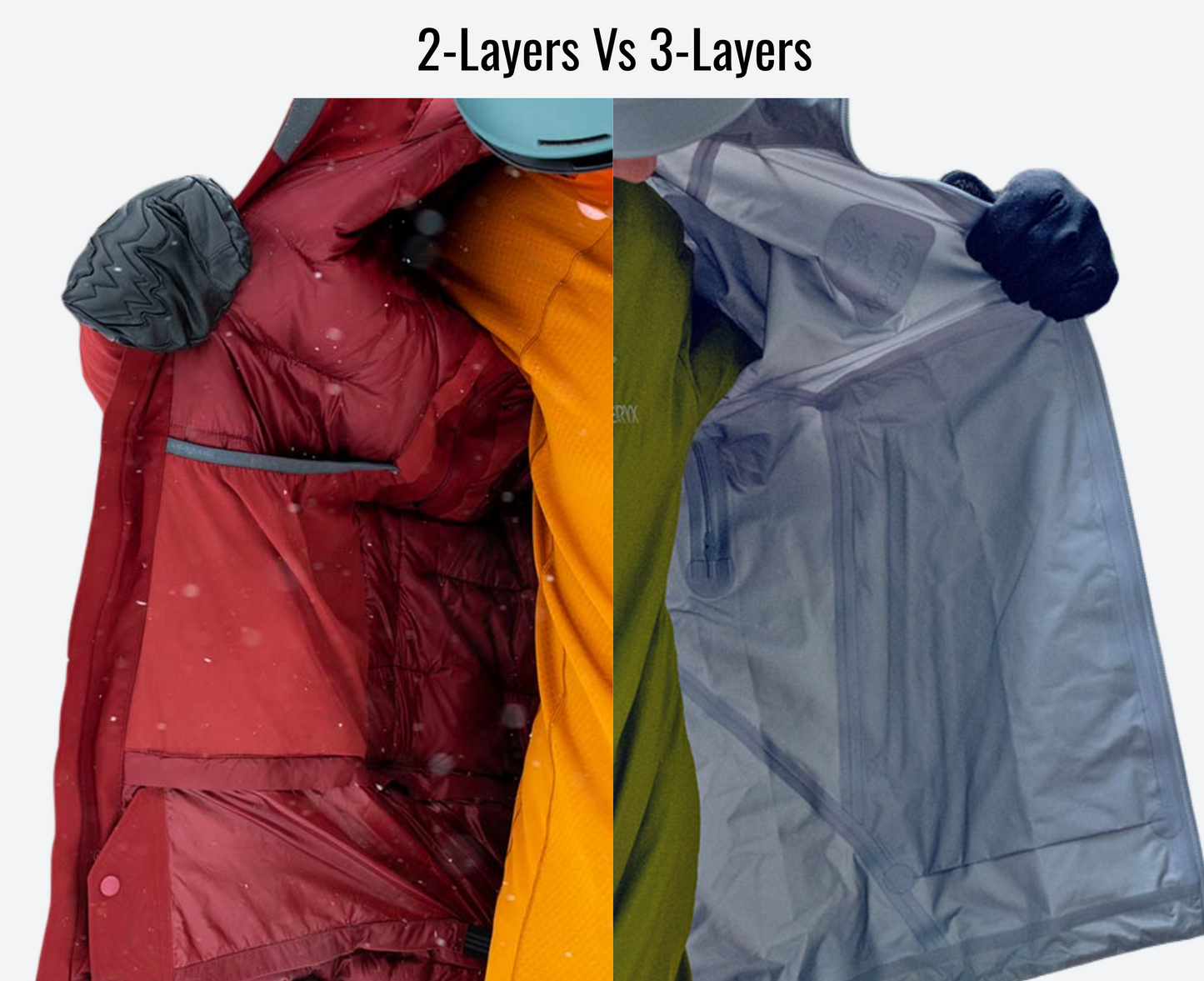
2L and 3L refer to the number of structural layers in the outermost part of a snow jacket. The main difference lies in whether there is a third inner layer tightly bonded to the second breathable membrane. This affects breathability, durability, weight, and comfort.
Compare the Fabric
| Comparison Criteria | 2L Fabric | 3L Fabric |
|---|---|---|
| Definition of Layers | 2L and 3L refer to the layers of the outermost fabric, not the entire garment. They define fabric construction, affecting waterproofness, breathability, durability, and comfort. | |
| Layer 1: Out Layer | ✔️ | ✔️ |
| Layer 2: Membrane | ✔️ | ✔️ |
| Layer 3: Lining | ✖️ | ✔️ |
| Waterproof | ★★★★☆ | ★★★★★ |
| Breathability | ★★★☆☆ | ★★★★★ |
| Durability | ★★★☆☆ | ★★★★★ |
| Weight | ★★★☆☆ | ★★★★★ |
| Comfort | ★★★★★ | ★★★★☆ |
| Price | ★★★★★ (Best Budget Choice) | ★★★☆☆ (Expensive but Worth It) |
| Best Use Cases | Casual & resort skiing, general outdoor activities | Backcountry, mountaineering, extreme conditions |
How to Choose Your Perfect Ones?
We highly recommend that you choose the right snow clothing for your needs and don't just stick to the parameters!
Water resistance is measured in millimetres (e.g., 8,000mm, 20,000mm) – higher numbers don’t always mean better performance.
- Beginner/resort skiing (gentle slopes, dry snow): 8,000-1,000mm is sufficient for light snowfalls.
- Multi-day trips/wet snow regions: Aim for 10,000-15,000mm with fully sealed seams.
- Backcountry/storm conditions: 20,000mm+ for heavy snow or rain.
Pro tip: Most resort skiers don’t need max waterproof ratings – proper seam sealing matters more than chasing numbers.
Waterproof Ratings: Know Your Weather
Water resistance is measured in millimetres (e.g., 8,000mm, 20,000mm) – higher numbers don’t always mean better performance.
- Beginner/resort skiing (gentle slopes, dry snow): 8,000-1,000mm is sufficient for light snowfalls.
- Multi-day trips/wet snow regions: Aim for 10,000-15,000mm with fully sealed seams.
- Backcountry/storm conditions: 20,000mm+ for heavy snow or rain.
Pro tip: Most resort skiers don’t need max waterproof ratings – proper seam sealing matters more than chasing numbers.
Balancing waterproofing and airflow prevents sweat buildup:
- Casual skiing: Moderate breathability (5,000-8,000g/m²) works for relaxed runs.
- Intensive skiing (off-piste, moguls): Prioritize high breathability (10,000g/m²+) to avoid overheating.
Key fact: Breathable fabric alone won’t keep you dry—pair it with moisture-wicking base layers.
Breathability: Match Your Effort Level
Balancing waterproofing and airflow prevents sweat buildup:
- Casual skiing: Moderate breathability (5,000-8,000g/m²) works for relaxed runs.
- Intensive skiing (off-piste, moguls): Prioritize high breathability (10,000g/m²+) to avoid overheating.
Key fact: Breathable fabric alone won’t keep you dry—pair it with moisture-wicking base layers.
Ski jackets themselves don’t provide warmth—insulation comes from mid-layers!
- Thin shell jackets (non-insulated): Ideal for most skiing—add/remove mid-layers as needed.
- Insulated jackets: Suitable for cold (-15°C or below) or low-activity skiing, temperature tolerance depends on the type and thickness of the insulation.
Warmth Strategy: Layer Smartly
Ski jackets themselves don’t provide warmth—insulation comes from mid-layers!
- Thin shell jackets (non-insulated): Ideal for most skiing—add/remove mid-layers as needed.
- Insulated jackets: Suitable for cold (-15°C or below) or low-activity skiing, temperature tolerance depends on the type and thickness of the insulation.
- Mobility-friendly design: Sleeves should cover wrists when stretched forward.
- Weight matters: Under 800g jackets reduce fatigue for active skiers.
- Ventilation zips: Underarm/chest vents help regulate temperature during variable weather.
- Reinforced zones: Look for abrasion-resistant panels on knees, elbows, and seat areas.
- Snow seal: Detachable inner snow skirts keep powder out without restricting movement.
Hidden Essentials
- Mobility-friendly design: Sleeves should cover wrists when stretched forward.
- Weight matters: Under 800g jackets reduce fatigue for active skiers.
- Ventilation zips: Underarm/chest vents help regulate temperature during variable weather.
- Reinforced zones: Look for abrasion-resistant panels on knees, elbows, and seat areas.
- Snow seal: Detachable inner snow skirts keep powder out without restricting movement.
- Weekend resort: Waterproof 8,000mm+, Breathability 6,000g+
- Multi-day alpine tours: Waterproof 15,000mm+, Breathability 10,000g+
- Off-piste/backcountry: Waterproof 20,000mm+, Breathability 12,000g+
Performance by Ski Style
- Weekend resort: Waterproof 8,000mm+, Breathability 6,000g+
- Multi-day alpine tours: Waterproof 15,000mm+, Breathability 10,000g+
- Off-piste/backcountry: Waterproof 20,000mm+, Breathability 12,000g+
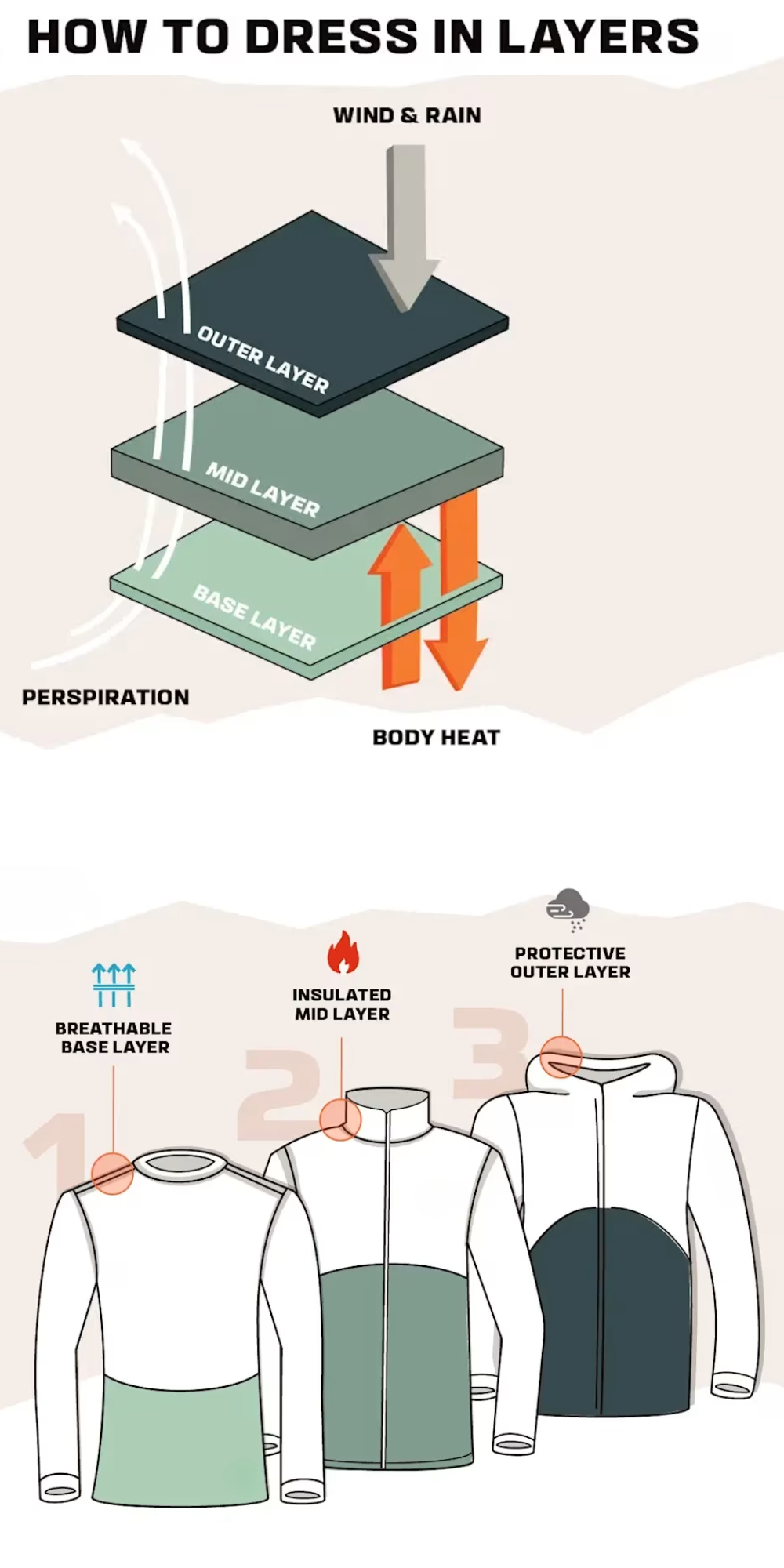
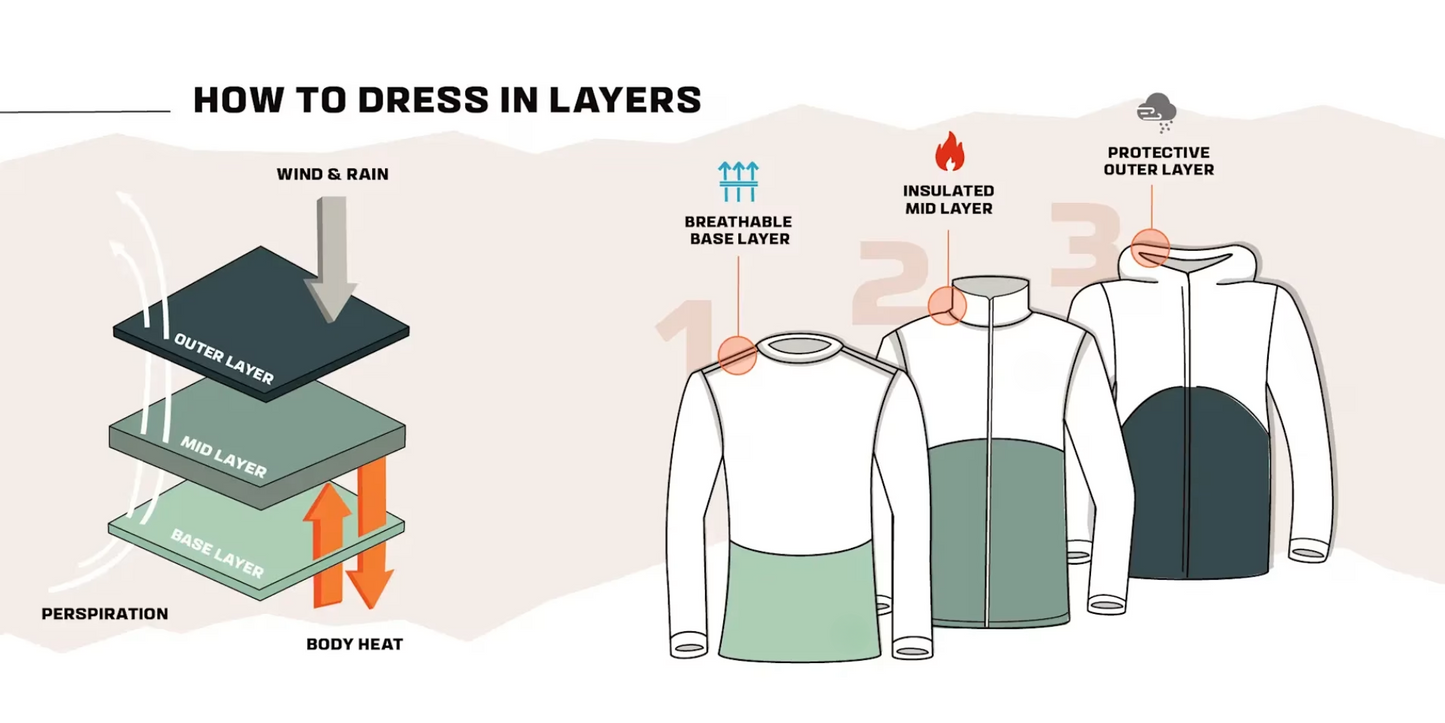
Three-Layer System
The concept of the three-layer system originated from outdoor activities, designed to help people stay warm and dry in extreme weather conditions. Through a scientific layering approach, the base layer wicks moisture, the mid layer provides insulation, and the outer layer offers wind and water resistance while maintaining breathability. Although initially developed for mountaineering and exploration, this method is now widely used in sports like skiing, ensuring comfort and performance in various environments.