This store requires javascript to be enabled for some features to work correctly.


1.366,00 RON
Prix régulier 874,00 RON| Matériau | Tissu en polyester 3L avec revêtement DWR, doublure en polyester |
| Indice d'étanchéité | 20 000 mm |
| Respirabilité | 15 000 g/m²/24hr |
| Isolation | Coton |
| Poids (Veste) | Environ 1000g |
| Poids (Pantalons) | Environ 800g |
| Ajustement | Moulant |
| Meilleur pour | Snowboard, Ski, Activités extérieures par temps froid |
| Durabilité | Résistance à l'abrasion > 300 000 cycles |
| Autres caractéristiques | Jupe de neige, ventilation sous les bras et à l'intérieur des cuisses, poignets ajustables, poches de rangement, poche pour pass de neige |
| Matériau | Tissu en polyester 3L avec revêtement DWR, doublure en polyester |
| Indice d'étanchéité | 20 000 mm |
| Respirabilité | 15 000 g/m²/24hr |
| Isolation | Coton |
| Poids (Veste) | Environ 1000g |
| Poids (Pantalons) | Environ 800g |
| Ajustement | Moulant |
| Meilleur pour | Snowboard, Ski, Activités extérieures par temps froid |
| Durabilité | Résistance à l'abrasion > 300 000 cycles |
| Autres caractéristiques | Jupe de neige, ventilation sous les bras et à l'intérieur des cuisses, poignets ajustables, poches de rangement, poche pour pass de neige |
1.366,00 RON
Prix régulier 874,00 RON| Matériau | Tissu en polyester 3L avec revêtement DWR, doublure en polyester |
| Indice d'étanchéité | 20 000 mm |
| Respirabilité | 15 000 g/m²/24hr |
| Isolation | Coton |
| Poids (Veste) | Environ 1000g |
| Poids (Pantalons) | Environ 800g |
| Ajustement | Moulant |
| Meilleur pour | Snowboard, Ski, Activités extérieures par temps froid |
| Durabilité | Résistance à l'abrasion > 300 000 cycles |
| Autres caractéristiques | Jupe de neige, ventilation sous les bras et à l'intérieur des cuisses, poignets ajustables, poches de rangement, poche pour pass de neige |
| Matériau | Tissu en polyester 3L avec revêtement DWR, doublure en polyester |
| Indice d'étanchéité | 20 000 mm |
| Respirabilité | 15 000 g/m²/24hr |
| Isolation | Coton |
| Poids (Veste) | Environ 1000g |
| Poids (Pantalons) | Environ 800g |
| Ajustement | Moulant |
| Meilleur pour | Snowboard, Ski, Activités extérieures par temps froid |
| Durabilité | Résistance à l'abrasion > 300 000 cycles |
| Autres caractéristiques | Jupe de neige, ventilation sous les bras et à l'intérieur des cuisses, poignets ajustables, poches de rangement, poche pour pass de neige |
Imperméabilité 20K - protection sèche pour chaque descente.
Rend le vêtement respirant, vous gardant au sec sur les pistes

Scellé avec du ruban étanche pour bloquer l'eau


Emportez tout ce dont vous avez besoin. La disposition intelligente des poches garde l'équipement sécurisé et facilement accessible


Plus de surchauffe. Plus de neige dans le dos. Aérations intelligentes + jupes pour un confort absolu


Fermetures éclair fiables, sans accrocs. Mentonnière protégeant la peau du froid du métal et des frottements.


Personnalisez la capuche et l'ourlet pour une étanchéité parfaite – le vent et la neige restent dehors, la chaleur reste à l'intérieur


Poche porte-forfait au bras – touchez et passez aux remontées. Pas de tâtonnements, pas de retards.
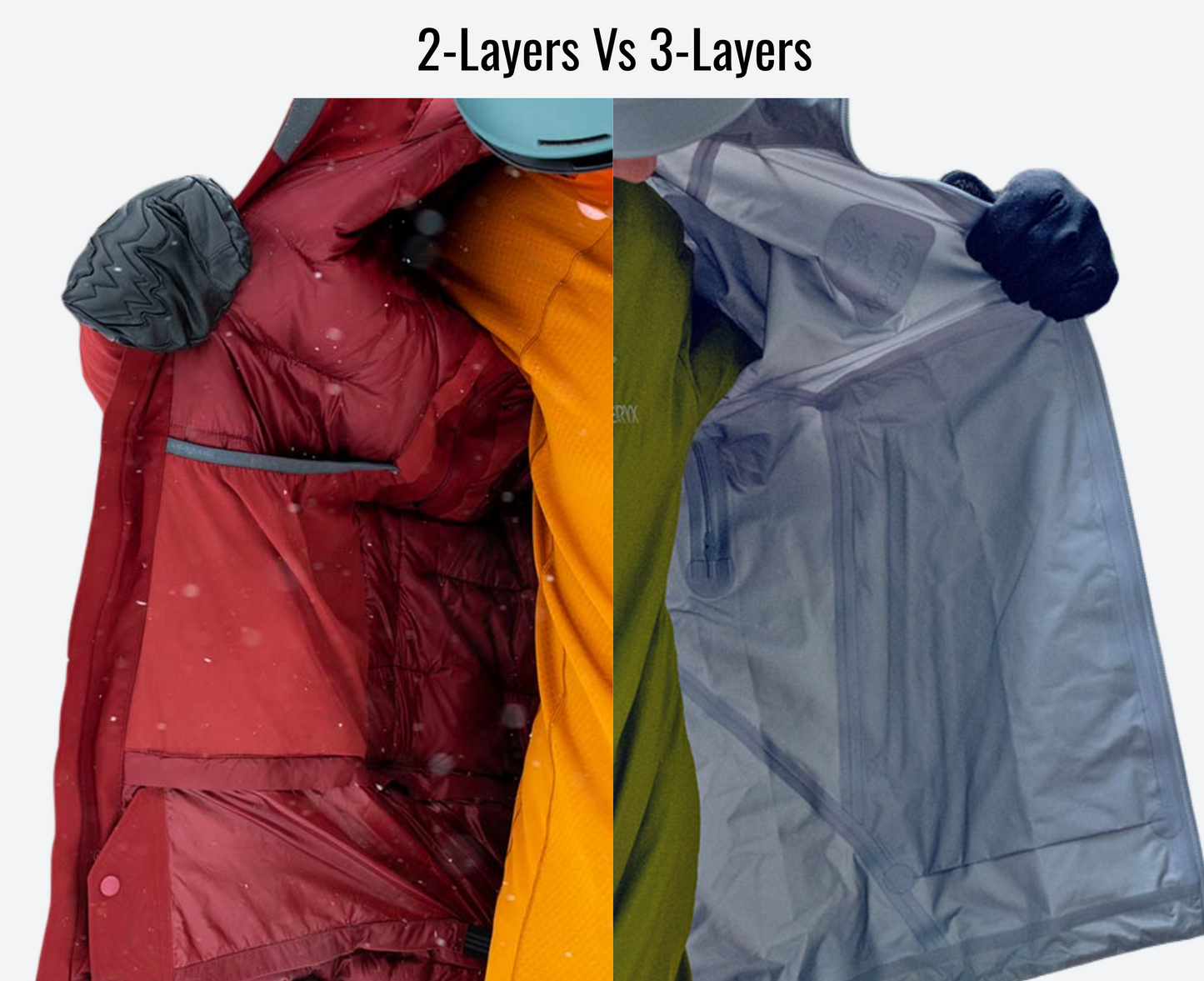
Découvrez la différence entre les designs à 2 couches et à 3 couches avec ChillCarve. Choisissez le parfait équilibre entre durabilité et confort selon vos besoins.
2L et 3L désignent le nombre de couches structurelles dans la partie extérieure d'une veste de ski. La principale différence réside dans la présence ou non d'une troisième couche intérieure étroitement liée à la deuxième membrane respirante. Cela influence la respirabilité, la durabilité, le poids et le confort.
| Critères de comparaison | Tissu 2L | Tissu 3L |
|---|---|---|
| Définition des couches | 2L et 3L font référence aux couches du tissu extérieur, et non au vêtement entier. Ils définissent la construction du tissu, influençant l'imperméabilité, la respirabilité, la durabilité et le confort. | |
| Couche 1: Couche extérieure | ✔️ | ✔️ |
| Couche 2: Membrane | ✔️ | ✔️ |
| Couche 3 : doublure | ✖️ | ✔️ |
| Imperméable | ★★★★☆ | ★★★★★ |
| Respirabilité | ★★★☆☆ | ★★★★★ |
| Durabilité | ★★★☆☆ | ★★★★★ |
| Poids | ★★★☆☆ | ★★★★★ |
| Confort | ★★★★★ | ★★★★☆ |
| Prix | ★★★★★(Meilleur choix budget) | ★★★☆☆(Cher mais ça vaut le coup) |
| Meilleurs cas d'usage | Ski de loisir et en station, activités de plein air générales | Hors-piste, alpinisme, conditions extrêmes |
Nous vous recommandons vivement de choisir les vêtements de neige adaptés à vos besoins et de ne pas vous limiter aux paramètres !
L'imperméabilité est mesurée en millimètres (par exemple, 8 000mm, 20 000mm) – des chiffres plus élevés ne signifient pas toujours de meilleures performances.
L'imperméabilité est mesurée en millimètres (par exemple, 8 000mm, 20 000mm) – des chiffres plus élevés ne signifient pas toujours de meilleures performances.
L'équilibre entre imperméabilité et circulation de l'air évite la transpiration:
L'équilibre entre imperméabilité et circulation de l'air évite la transpiration:
Les vestes de ski elles-mêmes ne procurent pas de chaleur—l'isolation provient des couches intermédiaires !
Les vestes de ski elles-mêmes ne procurent pas de chaleur—l'isolation provient des couches intermédiaires !


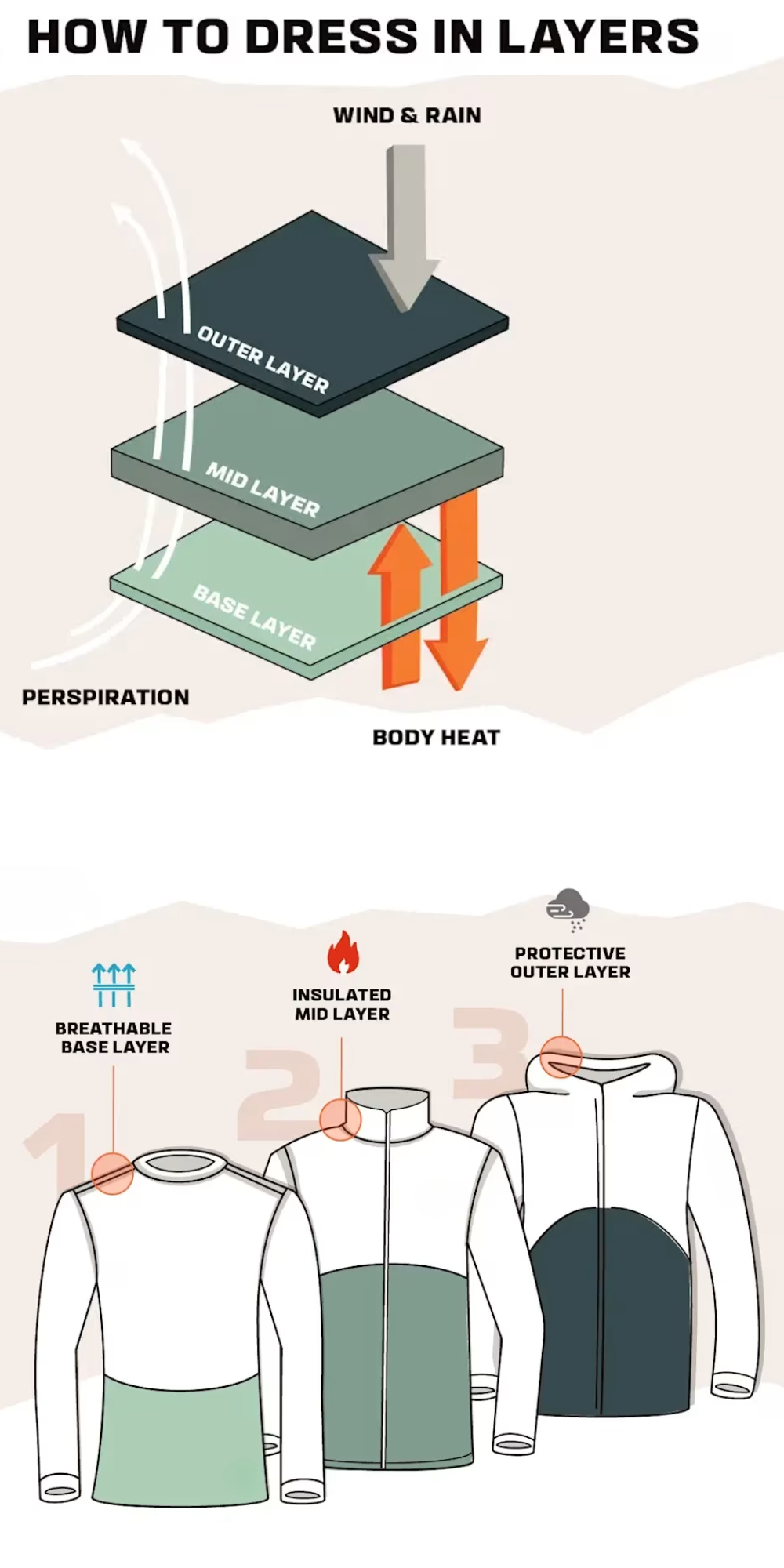
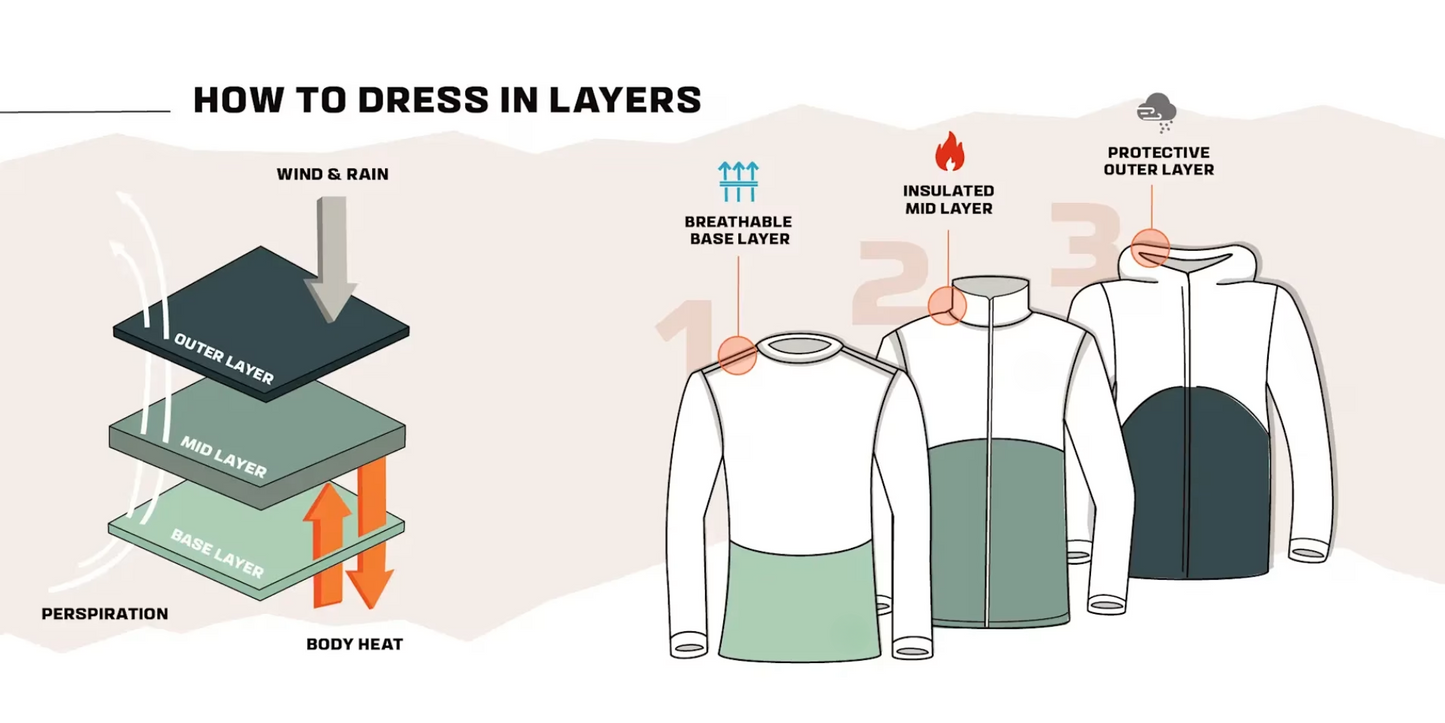
Le concept du Système des trois couches provient des activités de plein air, conçu pour aider les gens à rester au chaud et au sec dans des conditions météorologiques extrêmes. Grâce à une approche de superposition scientifique, la couche de base évacue l'humidité, la couche intermédiaire offre une isolation, et la couche extérieure résiste au vent et à l'eau tout en restant respirante. Bien qu'initialement développé pour l'alpinisme et l'exploration, cette méthode est désormais largement utilisée dans des sports comme le ski, garantissant confort et performance dans divers environnements.